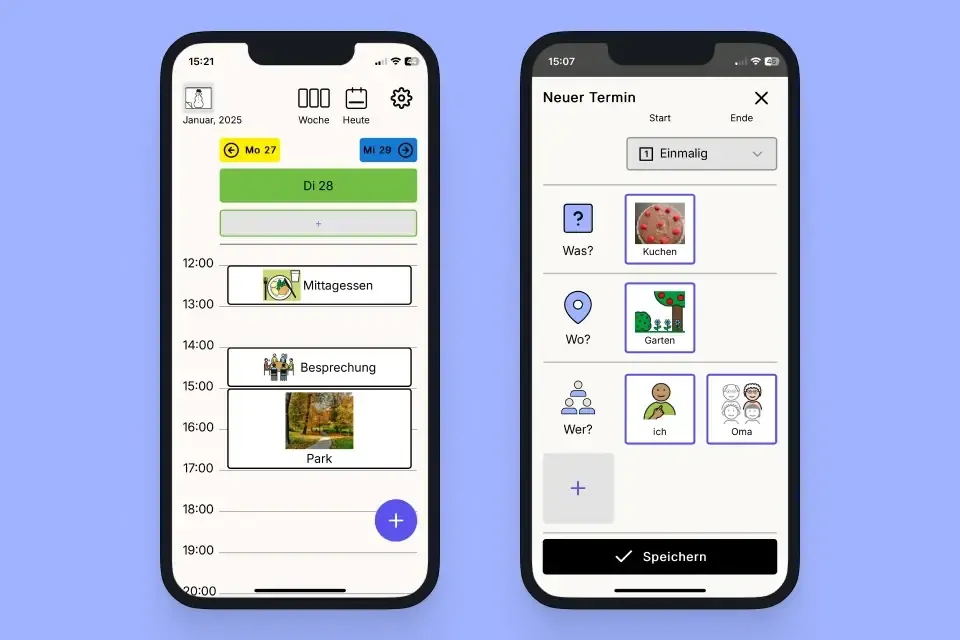
Independo explored, through a design thinking process, how digital navigation can be made more accessible for people with learning difficulties.
Our vision at Independo is to make the digital world accessible to everyone. To achieve this, it is crucial to understand the challenges faced by people with learning difficulties when using existing technologies.
As part of a design thinking process, we took a close look at the barriers that people with learning difficulties encounter when navigating digital apps.
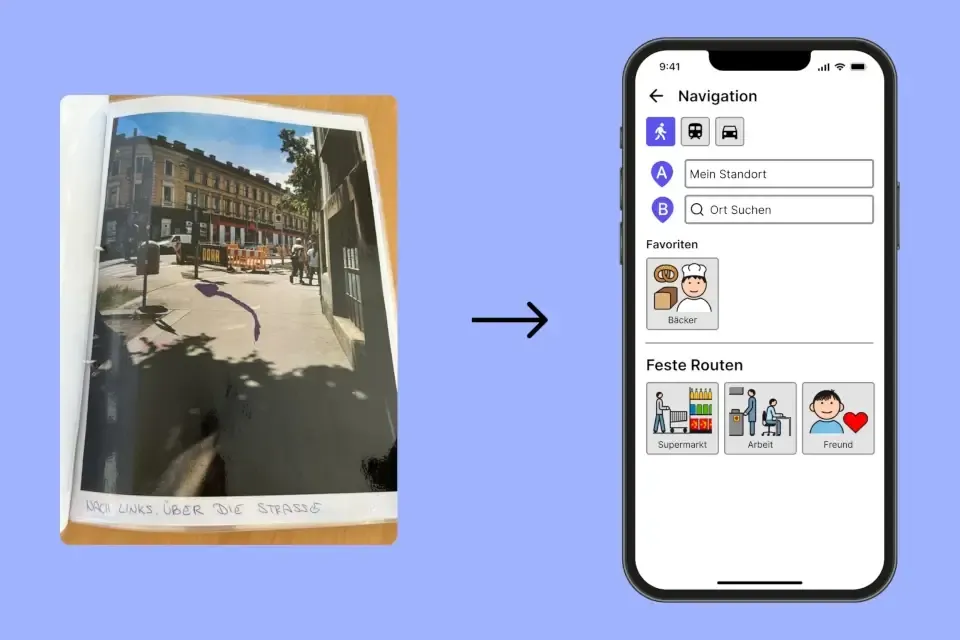
Together with partner institutions, we researched the obstacles that exist. In the first step - the problem analysis - we conducted workshops and interviews with the target group. It turned out that many users rely on analog aids for navigation: Photos of waypoints are printed out and marked manually with arrows. However, this method is time-consuming, difficult to update and prone to errors - especially if photos are lost or damaged. For people who cannot read text, there was a lack of clear visual cues about where they are and how to get to their destination.
Results of the design thinking
Based on these findings, we have developed a solution that relies on Augmentative and Alternative Communication instead of texts:
- Icon-based navigation: Intuitive symbols such as arrows, photos of buildings or markings make orientation easier.
- Personalized routes: Users can take photos of waypoints and add their own symbols.
- Help function: Easy way to reach pre-saved contacts directly via video. Alternatively, you can use predefined audio messages to ask people nearby for help.
The design thinking process not only helped us to better understand the needs of our users, but also generated concrete ideas and solutions. Our partner institution Integration Wien made a decisive contribution to this, enriching the entire process with their expertise and valuable insights.
Content Vienna Award
We received the Content Vienna Award for Digital Literacy for the project. This success shows how important it is to develop solutions together with the target group.
What happened next?
Building on these findings, we continued researching how digital maps can be made more accessible for people with learning difficulties, as part of the netidee-funded Independo Maps project.
One result is an open-source plugin for Leaflet that can display places on digital maps using pictograms, among other things. The plugin, its documentation, and a demo are publicly available.
We currently have no plans for a standalone Independo Maps app. The research, mockups, and technical outcomes of the project remain publicly available and can be reused by other developers and organizations.
The full design process, the prototypes and every result are collected on the Independo Maps research page.
You can find more of our open-source tools and research on the Independo Open Source page.