At Stellwerk Papenburg, participants use the Independo Journal on tablets to document daily routines and work activities more independently. Support professionals review and add context to these entries in the Portal and connect them with goals and activities.
At Stellwerk Papenburg, documentation does not only begin at a desk.
It begins where work steps are practised, daily routines are experienced, and goals are worked on in everyday life: on a tablet, with the Independo Journal, directly in vocational education.
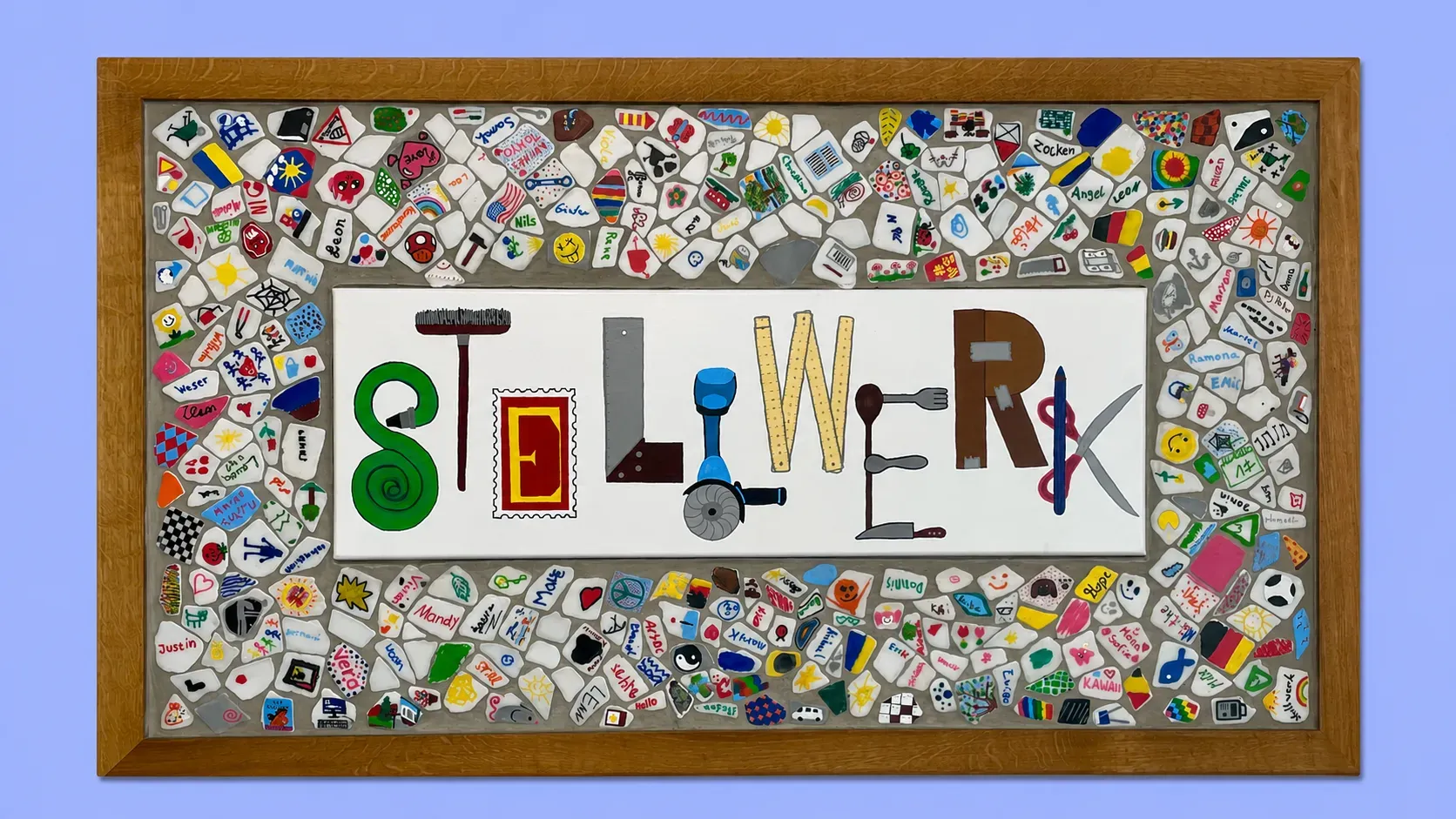
Stellwerk is part of St. Lukas Qualifizierung und Arbeit Caritas GmbH. Participants use the Independo Journal on tablets to document daily routines and work activities more independently. Support professionals use the Independo Portal to review these entries, add context where needed, and connect them with goals and activities.
This article does not describe an abstract product workflow. It shows how everyday entries are created in a concrete organisation, become visible in the organisational context, and can then be interpreted professionally.
Starting Point: Vocational Education in Everyday Practice
In vocational education, many development steps do not appear as big events. They become visible through repeated activities, work steps, routines, and small moments of growing independence.
A person completes one part of a task more independently. An activity is practised repeatedly. A goal is worked on across several days or weeks. Sometimes progress is obvious. Sometimes it sits in details that are hard to reconstruct from memory later.
When these situations are only passed on verbally or written down much later, context can be lost. What exactly happened? Which goal did the activity relate to? Which activity was selected? What kind of support was needed? And how does the person themselves understand their progress?
For Stellwerk Papenburg, professional documentation by support staff is therefore only one part of the picture. It is also important that participants themselves have a clearer overview of the work they have done and the goals they are currently working toward.
How Stellwerk Uses Journal and Portal
The workflow is deliberately simple: participants use the Journal app on tablets to document daily routines and work activities independently. The entries are created closer to the moment in which something happens.
In the Portal, support professionals then check these entries and add context where necessary. Professional responsibility therefore remains with the support professionals. The Journal does not replace professional documentation. It creates an everyday foundation that can be reviewed in the Portal and used professionally where appropriate.
In addition, support goals are created in the Portal. Participants can select these goals on the tablets. Goal work is carried out through predefined activities. Support professionals can follow progress in the Portal and see which activities are connected with a goal.
“Participants use the Journal app on our tablets to document daily routines and work activities independently. We support professionals use the Portal to review the entries and add to them where needed.”
Wilhelm, Grouplead 'Packaging & Assembly', Stellwerk Papenburg
Why Goals and Activities Matter
A journal entry is already valuable on its own because it makes an everyday situation visible. But for professional documentation, it becomes especially useful when it can be connected with goal work.
At Stellwerk, goals are created in the Portal and made available on the tablets. Participants can select what they are working on. The work itself is carried out through predefined activities. This creates a connection between what happens in everyday life and what is being supported professionally.
That is an important difference from a simple collection of notes. An entry does not stand alone. It can be connected with an activity, a support goal, or a development step. This helps support professionals see which situations may be relevant for goal work.
This also fits the idea of ICF-oriented and person-centred documentation: the point is not only that something happened. The important question is what the situation means for participation, independence, support, and goal work.
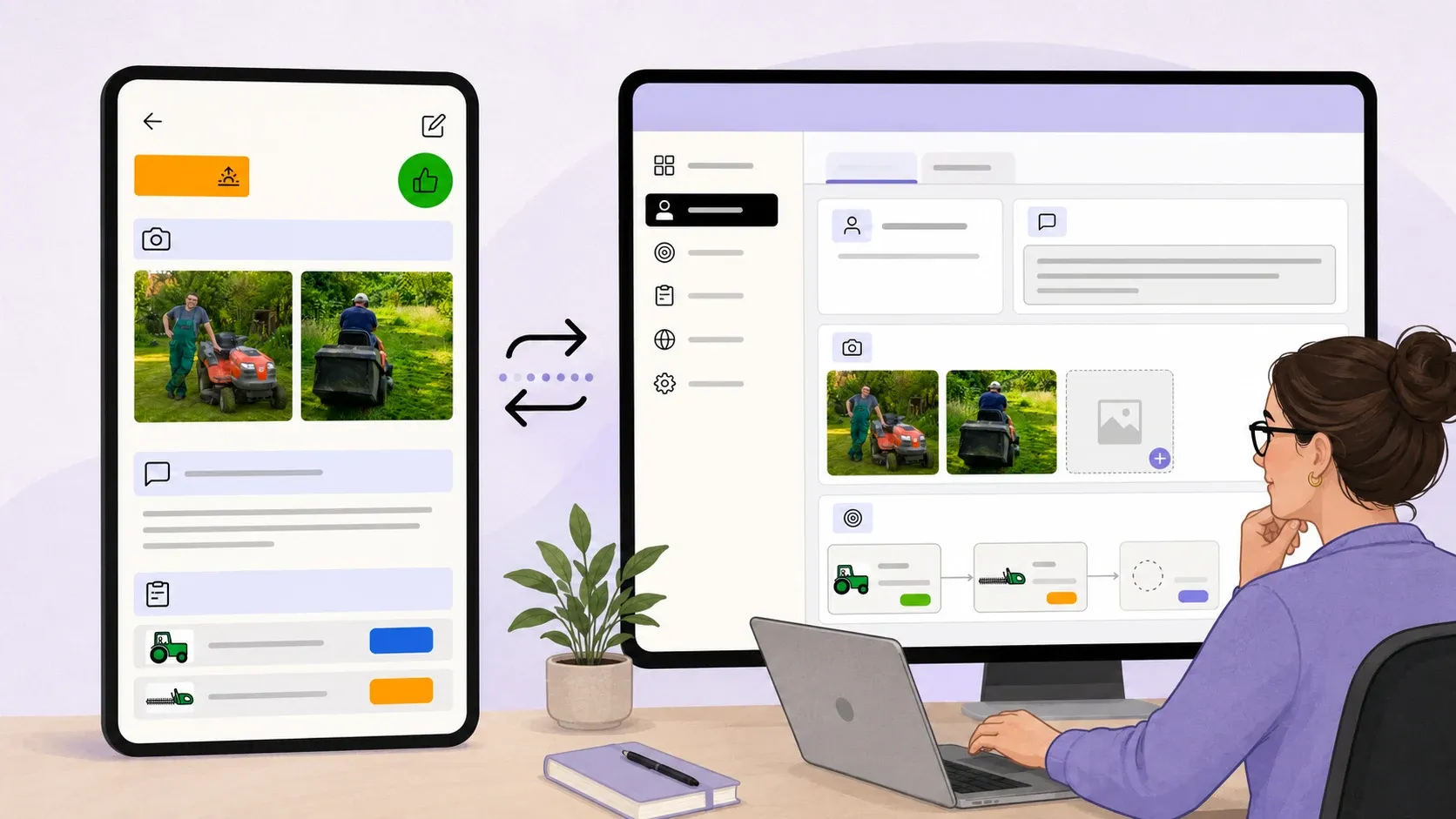
AI-generated , Show explanation
This image was created entirely with generative AI. It is not a photograph of a real situation.
A possible workflow: a Journal entry is created on the tablet, becomes visible in the Portal, and can then be connected with goals and activities by support professionals.
What Changes for Participants
The most important effect is not an abstract software feature. It is how the workflow is used in everyday life: participants can fill in and work with entries more independently. They can see more clearly what work they have done and which goals they are currently pursuing.
That matters professionally because documentation is not only created about people. Part of the perspective comes from the participants’ own everyday experience. Photos, symbols, selected goals, or activities can help make work steps and progress more tangible.
This is especially important in vocational education. Development often becomes visible through repeated activities, small routines, and gradually increasing independence. When these steps are visible, they can be discussed, supported, and documented more clearly.
“Participants have more independence because they can fill in and work with the entries themselves. With the app, it is easier for them to keep an overview of the work they have done and the goals they are currently pursuing.”
Wilhelm, Grouplead 'Packaging & Assembly', Stellwerk Papenburg
What Support Professionals Gain in the Portal
For support professionals, the Portal creates a concrete workspace for everyday entries. They can see what participants have documented, check entries, add context, and review the connection with goals and activities.
The Portal does not take over this professional interpretation. It supports professionals by giving them one place to review everyday entries and place them in the appropriate context: Which goal is affected? Which activity was worked on? Does anything need to be added? Is the entry relevant for progress notes or goal work?
The boundary is important: not every Journal entry automatically becomes professional documentation. Support professionals remain in control of which information they review, add to, and use further.
This does not create an automated report from everyday entries. It creates a better starting point for professional documentation.
What Took Effort at the Beginning
A practice report should not only show what works well. It should also show what organisations need to plan for realistically.
For Stellwerk Papenburg, the most demanding part came at the beginning: the team first had to create a pool of photos and goals to provide a useful foundation for participants.
This is a helpful point for other organisations. The starting point was not the technology alone, but the content preparation: suitable goals, understandable activities, useful photos or symbols, and a clear first area of use.
This preparation helps determine whether participants can use the Journal independently and whether support professionals find meaningful information in the Portal.
What Other Organisations Can Learn
The practice report from Papenburg shows three things.
First: everyday entries become more valuable when they are created where everyday life happens. When participants can record activities directly on a tablet, their perspective becomes visible earlier.
Second: professional documentation still needs review and interpretation. The Portal is not a replacement for support professionals. It is a place where entries can be checked, supplemented, and connected with goals.
Third: a good start needs preparation. Photos, goals, and activities should fit the organisation, the work context, and the participants.
For organisations that want to start with Journal and Portal, it can make sense to begin with one limited area: one group, one work area, or one clearly defined goal process. This helps the team learn which entries are useful, how goal work becomes visible, and which structure is really needed in the Portal.
For organisations in vocational education or work-related support settings, this can be a practical starting point. Daily routines, tasks, activities, and goals can often be connected clearly in these contexts.
Conclusion: Make Everyday Life Visible, Keep Professional Responsibility
Stellwerk Papenburg shows how Journal and Portal can work together in a vocational education setting.
Participants document daily routines and work activities more independently. Support professionals review and add context to entries in the Portal. Goals are created, activities are selected, and progress can be followed more clearly.
The decisive point is not that documentation is created automatically. The decisive point is that everyday entries become more useful: for overview, goal work, professional interpretation, and documentation that begins closer to everyday life.
Learn more about the Independo Portal
Learn more about the Independo Journal