
What information is needed to answer what happened in relation to a goal? This article shows how the person’s perspective, professional interpretation and goal links come together.
Sooner or later, during a planning update, a team meeting or a review, someone asks: “Show me what happened in relation to this goal.”
Usually, plenty has been documented. The question is still difficult to answer. Relevant information is spread across progress notes, photos, observations or reports. Someone now has to work out: Which entries relate to the goal? Which activities took place? What support was needed? And how did the person experience the situation?
The number of entries only helps to a point. What matters more is whether they can be connected into a traceable answer.
What an answer needs
A short progress note rarely says enough to understand a development. Several pieces of information are needed:
- the agreed goal and the period being considered,
- the activities connected to it,
- the person’s perspective,
- the professional interpretation,
- the support that was provided,
- and information about who recorded or changed something.
Not every resulting document serves the same purpose. A documentation record shows what was documented during a period. A goal evaluation also includes a professional assessment of how the goal developed. A formal service record may require additional administrative details, such as the type, extent or authorization of a service.
The terminology and templates also differ between German federal states, funding bodies and service providers. The official B.E.Ni manual for Lower Saxony, for example, provides for agreed outcome goals to be evaluated individually and for the perspective of the person receiving support to be included. Other procedures use different templates. The practical question comes first: What does this document need to answer? (B.E.Ni Manual 3.1)
Two perspectives, clearly separated
People who write little or not at all need other ways to record their perspective. In the Independo Journal, they can use photos, audio recordings, symbols, mood ratings or text. Goals and activities can also be presented with METACOM symbols and emojis.
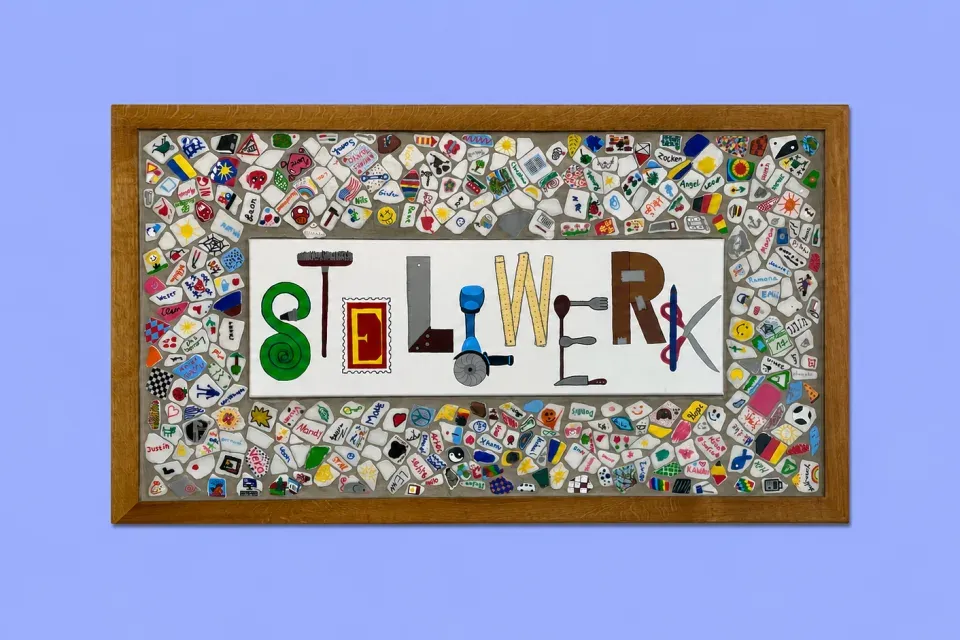
Which format works well depends on the person. At Stellwerk Papenburg, the vocational education and training unit of St. Lukas Qualifizierung und Arbeit Caritas GmbH, some participants take photos of their own work. Others write or mainly use the simple mood rating. The practice report shows how professionals then place these contributions in context for goal work and documentation.
A Journal entry does not automatically become professional documentation. First, the person decides which content is shared with the organization. A professional then decides what to include in the documentation. They can add context and connect the entry to a goal or activity.
The Portal displays both perspectives side by side: the person’s own contribution and the professional interpretation. If they differ, that difference does not disappear into a combined summary. It remains visible and can be discussed.
Why the process should remain traceable
A later summary can easily obscure how it was created. It may no longer be clear what the person said, what a professional observed and what was added during processing.
That distinction matters for further goal work. When discussing support or next steps, the team should be able to see what the professional interpretation is based on. A few simple questions help: Where did the information come from? Who accepted it? What was changed? When was the record finalized?
The change log in the Independo Portal records these steps. It shows, for example, when a professional accepts a Journal entry, adopts a goal link, adds a note or finalizes the record. Once finalized, the record can no longer be edited in the Portal.
Section 117 of Book IX of the German Social Code requires the involvement of the person receiving support in the overall planning procedure and the documentation of their wishes regarding the goals and nature of the support. It does not require a digital change log. It does, however, show why retaining only the final professional summary is not enough: the person’s perspective is part of the process. (Section 117, Book IX of the German Social Code)
Chronological or organized by goal
The same entries can answer different questions. A chronological view shows what happened during a selected period. A goal-based view shows which documentation relates to which goal. The record can also be limited to one goal and a specific period.
The PDF export contains the available personal contributions, professional interpretations, goal and activity links, and information about provenance and finalization status. The organization can choose whether entries are ordered chronologically or by goal.
If an organization needs a different structure for its reporting process, an appropriate output can be implemented together using the same documented information.
A record is not yet an evaluation
Three entries and three positive mood ratings do not establish that a goal has been achieved. Professionals must assess whether a goal has been achieved, partially achieved or should be continued by considering the documented course and the agreed goal.
The person’s perspective does not replace a complete formal service record either. It adds a perspective that could otherwise easily be lost from professional documentation.
The finalization status also needs precise wording. It is the finalized record in the Portal that cannot be changed. The exported PDF is not automatically protected against subsequent changes, and technical finalization is not a legal promise that a record will satisfy every audit or compliance requirement.
The documentation record brings together the available information. It does not decide on behalf of the responsible people what that information means professionally.
Start with the question, then choose the format
When setting up documentation, start with the question that will need to be answered later, rather than with the template.
“Show me what happened in relation to this goal” requires more than a collection of entries. Personal contributions, professional interpretation and goal links must remain distinguishable while still being easy to find together. That creates a foundation teams can actually use in conversations, goal evaluations and the next report.
Learn more about how the Independo Portal connects personal perspectives with professional documentation, or discuss your use case in an introductory consultation.