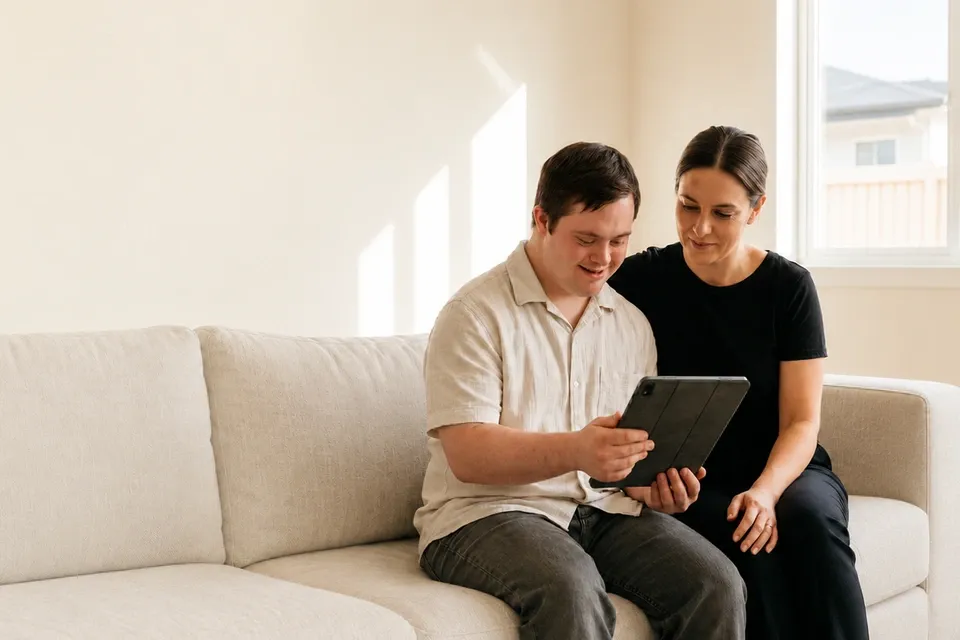
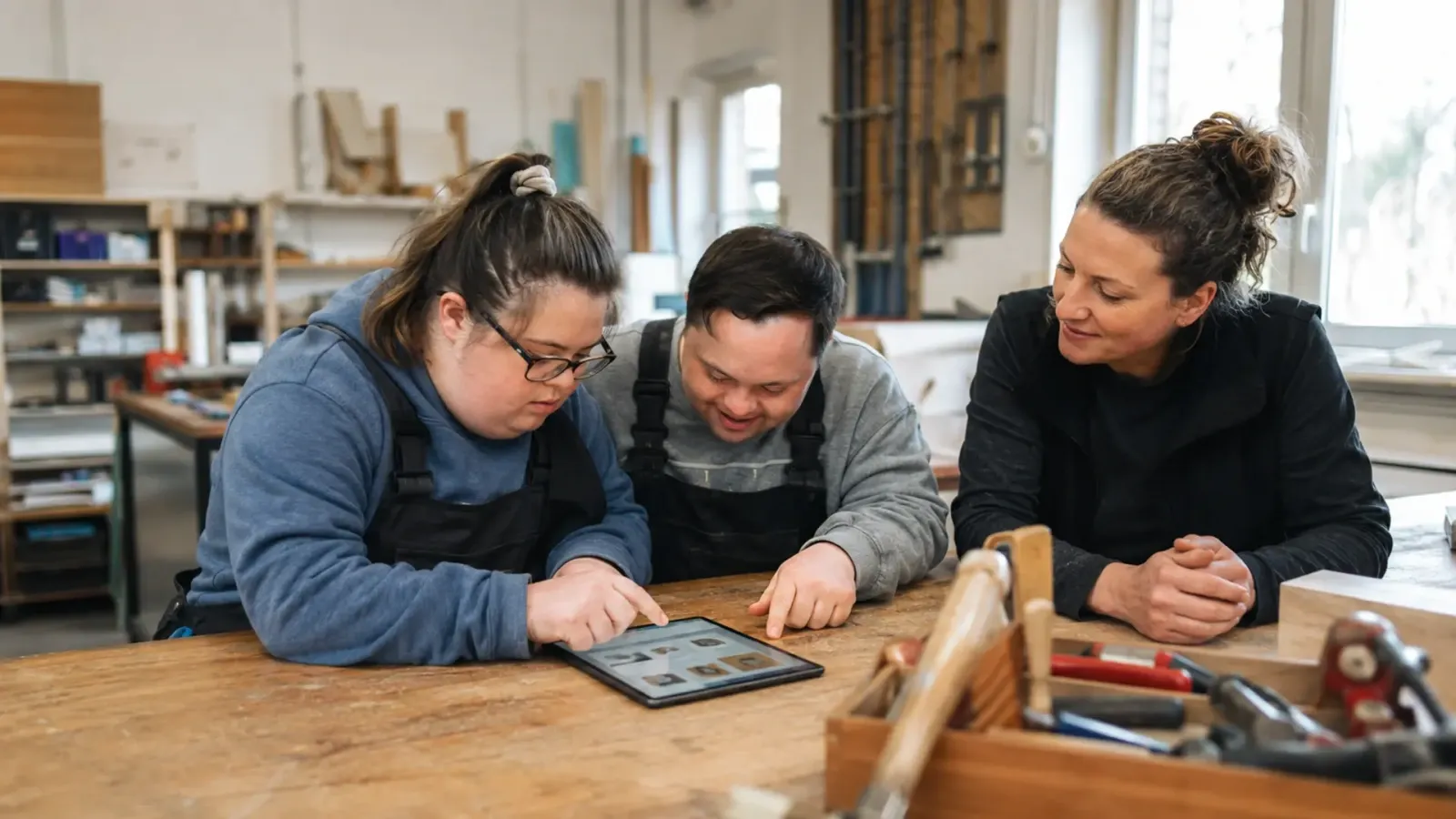
Person-centred documentation is more than respectful wording in progress notes. It makes the person’s everyday perspective visible and connects it with goals, activities, and professional interpretation.
Person-centred documentation can sound like a principle almost everyone agrees with. Of course documentation should put the person at the centre. Of course it should be respectful. Of course it should take participation, self-determination, and everyday life seriously.
But in practice, the question is more difficult: how can we tell whether documentation is truly person-centred?
Not every respectfully written progress note is already person-centred. And digital documentation does not automatically become more participatory just because it happens on a tablet instead of on paper.
Person-centred documentation means that documentation is not created only about people. It also makes visible how the person experiences everyday life, what matters to them, how goals become meaningful in daily situations, and which support actually helps.
What Person-Centred Documentation Is Not
Person-centred practice does not mean that professionals document less professionally. It also does not mean that personal impressions are copied into formal documentation without review.
Documentation remains professional documentation. It needs accuracy, context, responsibility, and a clear distinction between observation, personal perspective, and professional interpretation.
Person-centred documentation begins when the person is no longer only the subject of the file. They become visible as someone who can contribute their own experiences, preferences, goals, barriers, progress, and feedback.
This is especially important in disability support. The question is not only whether a service was delivered. The question is how support enables, strengthens, or stabilizes participation in everyday life.
Why Everyday Perspectives Often Get Lost
Many important pieces of information do not emerge during formal reporting. They happen in the middle of everyday life: during a work task, in a group activity, while shopping, while arriving somewhere, or during the transition from one activity to the next.
One person uses a symbol to show that a situation was too loud. Another records a photo to show that a work step went well. Someone records a short audio message because writing is too difficult. Or a professional observes that a familiar barrier was managed today with less support.
When these situations are reconstructed from memory later, a lot can get lost. A concrete everyday experience can quickly become a short sentence: “Participation was possible.” Or: “Needed support during the activity.”
These sentences may be formally correct. But they rarely show what the situation meant to the person. They also do not always show whether a goal became more understandable, which activity was involved, or which environmental barrier became visible.
This is where person-centred documentation begins: it brings the everyday perspective closer to professional documentation.
Participation Needs Suitable Ways to Communicate
People can only contribute their perspective when the form of documentation works for them. For some people, a short text is right. For others, symbols, photos, audio, simple ratings, or a combination of several forms may fit better.
The German Society for Augmentative and Alternative Communication describes communication as a foundation for participation. AAC can supplement or replace spoken language and may include gestures, symbols, photos, technical aids, and other forms of communication.
Article 21 of the UN Convention on the Rights of Persons with Disabilities also names different forms of communication, including augmentative and alternative communication. The core idea matters for documentation: people should not be excluded from participation because the expected communication route does not work for them.
For documentation, this means that if writing is the only option, some perspectives become quieter. If everyday life can also be recorded through symbols, images, audio, or simple inputs, a different kind of access becomes possible.
That does not make documentation automatically complete. But it creates a better starting point.
When Goals Become Tangible in Everyday Life
An anonymized example from a vocational education and work setting shows the point clearly.
A team reported that goals became much more present and understandable for participants once they interacted with them regularly in everyday life. The goals were no longer only written in a plan or report. Participants could actively connect their own everyday entries with activities and better understand: What am I doing right now? What am I working on? Why does this situation matter for my goal?
This is a small but professionally important difference.
A goal such as “I want to carry out work steps more independently” remains abstract if it only appears in a document. It becomes more concrete when a person can record after an activity: this is what I did. This activity belongs to my goal. This was easy. This was difficult. This is where I needed support.
Person-centred documentation does not only make goals visible for reports. It makes goals easier to talk about in everyday life.
The Role Professionals Still Have
Precisely because the person’s perspective matters, the role of professionals remains central.
Not every everyday entry is automatically professional documentation. Not every photo, symbol, or audio note is meaningful without context. And not every personal comment should be transferred into formal reports without review.
Professionals review, discuss, and interpret. They distinguish between personal expression, observable situation, and professional meaning. They ask questions such as:
- Which activity was involved?
- Which goal or developmental step is connected?
- Which barrier or facilitating factor became visible?
- Which support was helpful?
- What should the team continue to observe or adapt?
This professional interpretation is not the opposite of person-centred practice. It is part of it. Person-centred documentation does not mean handing over responsibility. It means connecting professional responsibility with the person’s perspective.
Connecting Everyday Life, Journal, and Portal
In the Independo context, this connection happens through the interaction between the Journal and the Portal.
The Journal is where everyday life can be recorded from the person’s perspective: with symbols, photos, audio, text, or simple feedback. It is not an institutional file. It is a personal space for expression and reflection.
When the Journal is used in an organizational context, entries can become visible in the Portal. There, professionals review the entries and decide whether they are professionally relevant, should be enriched, or should not be included in formal documentation.
This boundary matters. The personal perspective does not automatically become official documentation. It becomes visible, can be discussed, and can be professionally interpreted when relevant.
This creates a workflow that is neither purely top-down nor automatic. The person contributes everyday perspective. Professionals contribute professional responsibility. The Portal helps connect both.
Why Context Still Matters
Person-centred documentation does not only look at a person’s behaviour. It looks at the situation.
The World Health Organization’s ICF describes functioning and disability in relation to activities, participation, and environmental factors. This perspective helps avoid interpreting situations too quickly as traits of the person.
For example, a person stops an activity. Without context, the note might become: “Was unmotivated.” With context, something else may become visible: the room was loud. The instruction was too fast. The symbol material was missing. Or the activity did not connect well to the agreed goal.
Person-centred documentation therefore does not only ask: what did the person do?
It also asks: what was the situation? What was the goal? What helped? What made participation harder? What does the person say about it?
What Organizations Can Change in Practice
Organizations do not need to begin with a large transformation project. A clearly limited first area is often enough.
A team can start by asking:
- Which goals should become more visible for participants in everyday life?
- Which activities are suitable for first everyday entries?
- Which forms of expression fit the people involved: symbols, photos, audio, text, or simple ratings?
- Who reviews entries in the Portal?
- When is an entry professionally enriched?
- What remains a personal Journal entry and is not transferred into formal documentation?
The BAR materials on participation planning emphasize that participation planning should be individualized, coordinated, and actively involve the person entitled to support. For everyday practice, that means participation needs structure. And structure must be simple enough to be used in real daily work.
Conclusion: Not Only Writing About People
Person-centred documentation does not mean that professionals work less carefully. It means that documentation is created closer to the person, closer to everyday life, and closer to actual participation.
It does not only ask what must be documented. It also asks which perspective would otherwise remain invisible.
When people can record everyday entries with symbols, photos, audio, or simple inputs, documentation starts from a different place. When professionals review those entries, connect them with goals and activities, and interpret them professionally, this can become responsible documentation practice.
Documentation is then no longer only a report about support. It becomes a tool for connecting everyday life, goals, participation, and professional action more clearly.
Learn more about how the Independo Journal and Independo Portal help organizations make everyday perspectives visible and professionally usable.